Dental Technology Solutions: Smarter Visits, Brighter Smiles
Reviewed by Dr. Lena Khan, DDS
November 10, 2026
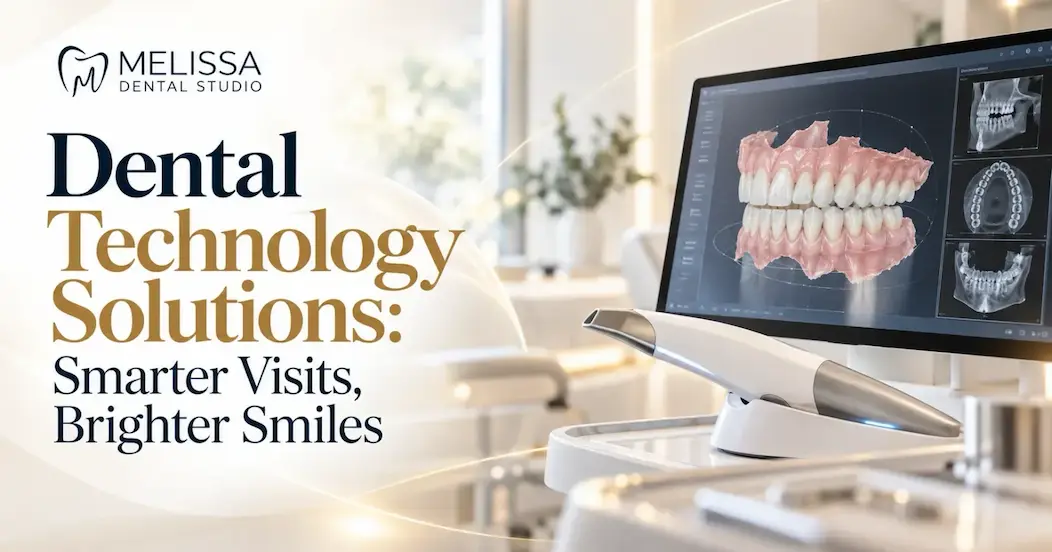
Dental technology solutions are the digital tools a modern dentist uses to find and treat problems: 3D CBCT imaging, intraoral 3D scanners, digital x-rays, intraoral cameras and soft-tissue lasers. At Dental Studio of Melissa they mean shorter visits, lower-radiation x-rays, no messy impression trays and treatment plans you can see on screen before you decide.
Going to the dentist used to feel slow and tense. Today, dental technology makes each visit faster and calmer. At Dental Studio of Melissa, we use these tools every day, so patients get clear answers in minutes rather than weeks. This guide explains how each tool changes your visit and why it matters for your smile.
What are dental technology solutions?
Each tool gives your dentist a clearer view of your mouth, so treatment can be planned with more care. A modern office relies on a full set of tools that work together, from check-in to the treatment chair. You can see the full list on our dental technology page.
Older methods often felt slow and uncomfortable: film x-rays took time to develop, and impression trays felt heavy and messy. Modern tools are faster and gentler.
Why seeing your own images matters
Many patients choose a dental office online before they ever walk in, and they want speed, clarity and less guesswork. Because our imaging is digital, Dr. Khan can show you real images of your own teeth on the same screen she is looking at. You see exactly what she sees, which builds trust and helps you understand your treatment plan before you agree to anything.
How does 3D CBCT imaging help plan treatment?
Dentists use CBCT to plan dental implants and tooth extractions with more confidence, and it uses less radiation than many hospital CT scans. The American Dental Association supports digital imaging as part of accurate, safer care. Because the image is so clear, tricky cases involve far less guesswork, and if a bone graft is needed before an implant, the scan shows it.
Do 3D scanners replace messy dental molds?
Yes. A 3D intraoral scanner replaces gooey impression trays. Instead of biting into putty, you simply open your mouth while a small wand takes pictures of your teeth for a few seconds. A full 3D model appears on the screen in front of you.
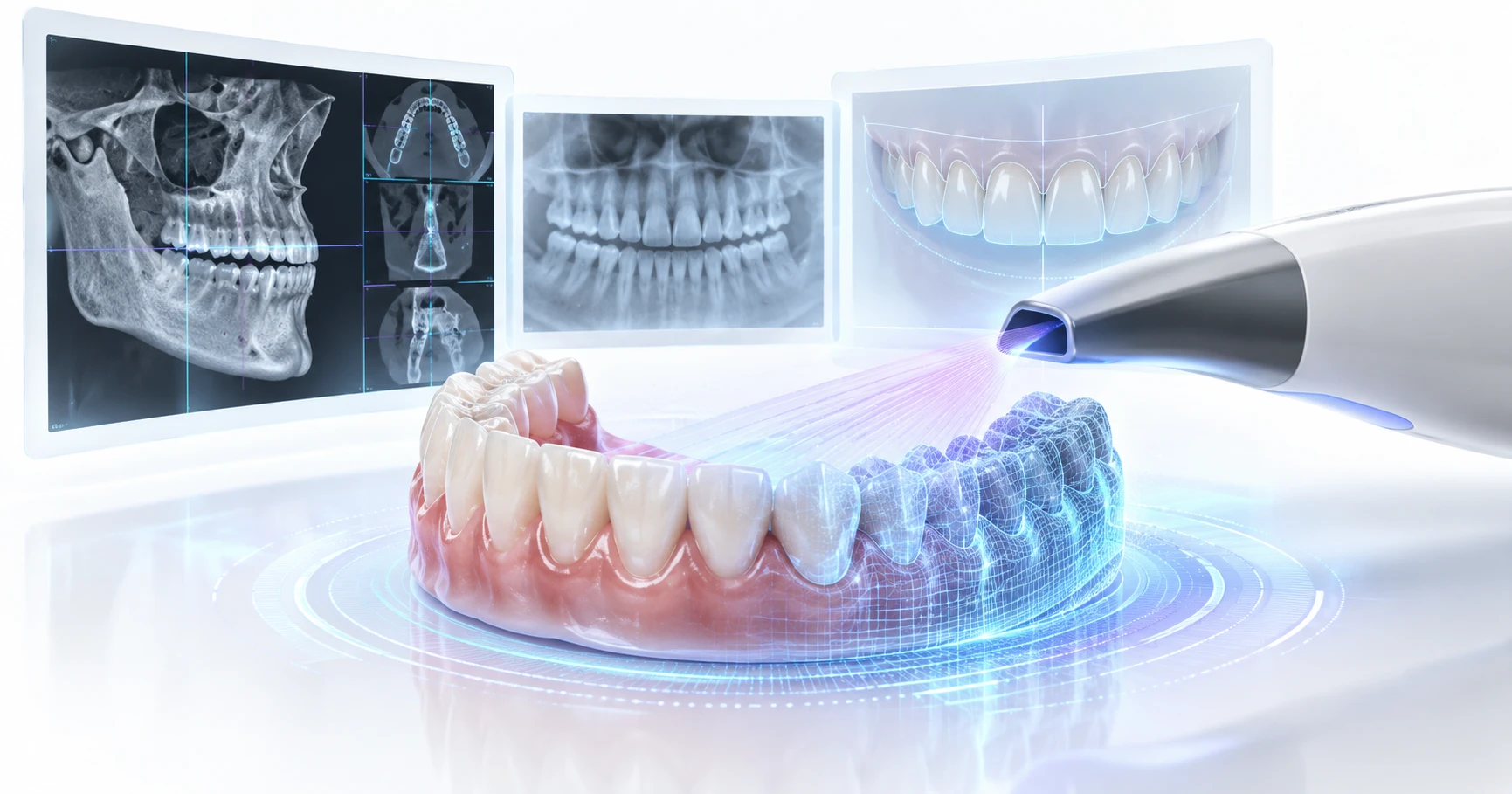
Digital scanners create a 3D model of your teeth in seconds.
That model is used for crowns, Invisalign clear aligners and porcelain veneers, and it helps track small changes over time. Because the scan is precise, restorations tend to fit well from the start, which means fewer adjustments and fewer visits.
Is laser dentistry gentler?
For many patients, gum treatment sounds scary. Soft-tissue lasers use focused light to treat gum tissue, often with less bleeding than traditional methods and, in many cases, a quicker recovery. They are used in treatments such as gum disease therapy.
Laser care suits children and nervous adults alike because it often feels gentler. If anxiety is what keeps you away, ask about our sedation options as well.
Are digital x-rays faster and safer?
A digital dental x-ray uses a small sensor instead of film. The image appears on the screen in seconds, which means shorter visits and less waiting, and it uses less radiation than older film x-rays. The U.S. Food and Drug Administration notes that digital x-ray systems can lower patient radiation exposure. Because the image loads instantly, your dentist can zoom in and check details with you right away.
How often you need x-rays depends on your age, dental health and risk of decay. We only take them when they are needed and always explain why.
Can you preview cosmetic results before treatment?
Cosmetic work feels risky when you cannot picture the outcome. With digital photos and scans, your dentist can show a preview of likely changes, such as a brighter shade, straighter teeth or a new smile shape, before any work starts. It takes the guesswork out of planning cosmetic dentistry and smile makeovers. Previews are a planning guide; actual results may vary.
Old tools vs new tools: what changed?
| Step in your visit | Older method | Modern method |
|---|---|---|
| Impressions for crowns and aligners | Putty trays held in the mouth | 3D intraoral scan in seconds |
| X-rays | Film developed over several minutes | Digital image on screen in seconds, lower radiation |
| Implant and extraction planning | Flat 2D x-ray | 3D CBCT view of bone, roots and nerves |
| Explaining a problem | Described verbally | Intraoral camera image you can see |
| Gum treatment | Scalpel and sutures in many cases | Soft-tissue laser in many cases |
| Cosmetic planning | Imagining the result | Digital preview before treatment |
Each row tells the same story: older methods asked patients to trust blindly, while newer methods let patients see for themselves.
Benefits at a glance
These benefits add up, especially for families who visit more than once a year.
Who uses this technology at our office?
Dr. Khan earned her Doctor of Dental Surgery from the University at Buffalo School of Dental Medicine and has advanced training in implants, veneers and extractions. Her approach follows guidance from the National Institute of Dental and Craniofacial Research. Meet Dr. Khan
Patients from Melissa, McKinney, Anna and Princeton rate the practice 4.9 stars from more than 100 Google reviews. You can read what they say on our reviews page.
What happens at your first visit?
Your first visit starts with a short conversation about your smile goals. Next, our team takes clear digital images of your teeth and gums, which only takes a few minutes. Dr. Khan then reviews the results with you on the same screen, step by step, so nothing feels like a secret or a surprise. If treatment is needed, she explains each option in plain words before you decide anything.
Frequently asked questions
What do these dental tools mean for my visit?
Clearer images, shorter waits and treatment plans you can see and understand before you decide.
Is a CBCT scan safe?
Yes. A dental CBCT scan uses a low dose of radiation, less than many hospital CT scans, and gives a detailed 3D view of your teeth and jaw. It is only taken when the extra detail is needed, for example to plan implants.
Does a 3D scanner feel uncomfortable?
No. It is far easier than putty impression trays. A small wand moves around your teeth and each scan takes only a few seconds.
Can laser treatment replace stitches?
In many soft-tissue cases, yes. Laser treatment often means less bleeding and faster healing, though the right method depends on your case.
Are digital x-rays safer than film x-rays?
Digital x-rays use less radiation than older film x-rays, and the images appear on screen in seconds.
How do I book an appointment?
You can book online or contact our office.
Modern tools, gentle care and clear answers, all under one roof in Melissa, TX.
Sources: American Dental Association · U.S. Food and Drug Administration – Medical X-ray Imaging · National Institute of Dental and Craniofacial Research. This article is for general information and does not replace a dental exam. Reviewed by Dr. Lena Khan, DDS, General Dentist, Dental Studio of Melissa.
Need urgent dental care now?
Call Dental Studio of Melissa and we will help right away.